Top 3 alternatives to WalkMe


WalkMe is one of the pioneers of digital adoption. Founded in 2011, it was recognized as the leading

DAP product in Everest Group's PEAK Matrix Assessment of DAP vendors.

It’s a publicly traded company, with headquarters in Israel. 

However, WalkMe has many drawbacks, which lead customers seeking a good

DAP solution to look for alternatives. In this article, we will discuss some of the most

heavyweight drawbacks of WalkMe, and provide top alternatives that will make your life easier,

and save you time/ money in your search for a DAP. 
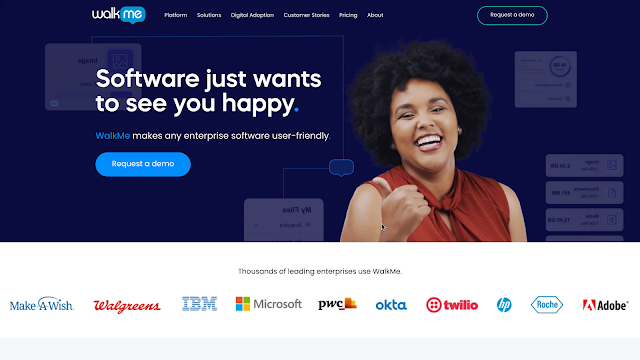
WalkMe website


So what is WalkMe first of all? It’s a DAP vendor, known for custom solutions and expensive yearly

contracts. WalkMe customers include IBM, Hitachi, PWC and more. Interestingly, WalkMe is suited to

work best when you are onboarding employees, training and engaging them. 

WalkMe has a serious background in the Digital Adoption sphere and is trusted by the giants.

Most of WalkMe’s customers are huge enterprises with substantial resources (developers)

to help them out with integration and ongoing support, which makes it difficult for smaller

companies to confidently explore WalkMe’s capabilities. 


WalkMe Reviews


WalkMe has a 4.4 / 5 rating on Capterra based on 59 reviews and 7.8 / 10 on TrustRadius

based on 45 reviews. 


Pros 👍

Cons 👎

The features are amazing and really

helpful to users on your website once

implemented

WalkMe's integration process for our LMS

was very time-consuming and complicated,

requiring months to implement.


They will NOT let you out of your multi-year

contract. That alone should be a cautionary

tale for the consumer.


WalkMe Pricing


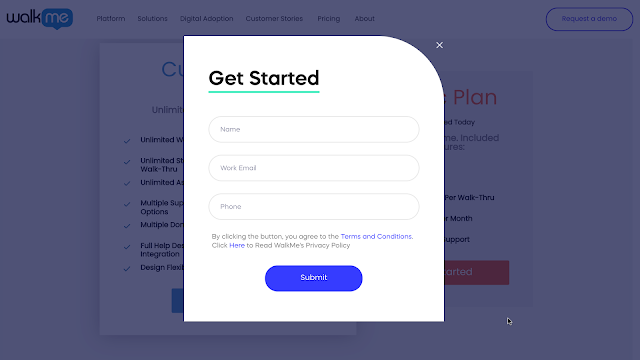
WalkMe "Get Started" form with unclear outcome


WalkMe does not have publicly available pricing published on their website. There is a pricing page,

but it is misleading. There are two pricing plans, and once the customer hits “Get started” on one

of them, they see a form (see above), with no indication of what is the objective of this form or why

is their data being collected (name, work email, phone number). This is an experience difficult

to explain. In their quest for collecting as many leads as possible, WalkMe falls victim to sketchy

methods that do not give them a good name. In general, not having a transparent, public pricing

is a practice adopted by huge bureaucratic organizations that often quote based on prospective

client’s size, market position and not based on their product’s real capabilities or the value it brings.

With subscription models and free plans available all around the DAP market, WalkMe’s

approach itself should be a thing of the past, or at least be considered unethical. 


Why consider WalkMe alternatives


WalkMe has earned a reputation of a market behemoth that works with other market behemoths.

While there is nothing reprehensible about it, we can make some conclusions

  • No transparent pricing - the quote you receive from WalkMe will be a product of the
    sales manager’s judgment, which in many cases is defined by the appeal of
    the commissions they earn from their deals

  • No free trial - no cheap and fast way to validate the service’s fit for
    your business - essentially blocks you from understanding whether WalkMe
    solves your problem or not, without having to risk your users’ experience 

  • Long implementation time - it may take you months to integrate
    WalkMe (based on public reviews from their users)

  • Expensive - WalkMe may cost you anywhere from
    $9000 to over $50 000 per annum. 


3 excellent WalkMe alternatives

  • Usetiful

  • Lou Assist

  • InlineManual


Usetiful

Usetiful is a no-code Digital Adoption Platform that enables you to create well-targeted
product tours and onboarding experiences, such as onboarding checklists, as well as feature announcements, smart tips for forms.

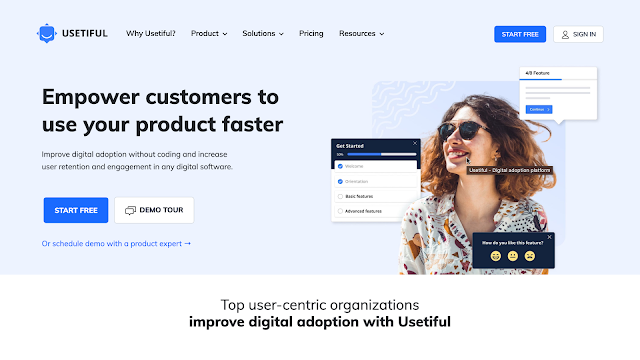
Usetiful homepage

Usetiful has a sophisticated targeting system, as well as the ability to receive user
information from your system and use that information to target product guides with
even more precision. User information from your system can also be used to personalize content.

Usetiful has a very democratic pricing and very sophisticated targeting and segmentation toolsets.
It is straightforward to install and start using. 

Usetiful features a theme customizer that involves custom CSS. The latter allows you
to customize the look and feel of your content entirely and make it feel like an organic part of your app.

Building tours with Usetiful is easy - you are not limited to use Chrome’s extension, but can also build tours in the dashboard for a complete, bird-eye picture of what users will interact with.


  • Free forever plan - EUR 0 forever - unlimited product tours, smart tips, checklists and 2000 assists per month, 2 team seats

  • Plus - EUR 29.9 / m - 5000 assists per month, 3 team seats and access to Assistant

  • Premium - EUR 69 / m - starting from 10,000 assists per month, 7 team seats

  • Enterprise - custom plan based on customer needs


Usetiful Pricing


Usetiful Reviews


Usetiful is rated at 4.8 / 5 on G2 based on 13 reviews and and 4.8 / 5 on Capterra based on 4 reviews. 

Here are some user impressions.

Pros 👍

Cons 👎

We've actually been searching for a tool just like this for a very long time. One time, we even briefly considered building something ourselves. The sketches we made actually happened to be extremely similar to Usetiful. So we were very pleased to find this tool. Firstly, it comes with a great for money, and gives you the ability to test it before purchasing. There is even a free version. Very easy to install, it worked even for me - without any real coding experience. Basically, Usetiful

has got everything you need to create onboarding

guides for your online applications. You are able

to create number of various guides, set up

exactly how they should look and customise

when they should start. Creating the guides is

very easy, you select which element they should

point at (if you want that) in a user interface and

write the information you want to tell your users.

There are a number of ways to show certain

steps only to certain users, and overall great

customisability how it should work. The tours

can span several pages, and you can move

forward in the tour by letting the users click

certain objects or by triggering custom events.

Customized themes are only available

on the paid plans, so we encountered a

styling conflict related to the Usetiful

button that appears in the lower right

corner of the page based on the

default styles used in our product.

It’s understandable considering

that the free version would have

certain limitations, though.


Usetiful VS WalkMe


Usetiful

WalkMe

Public pricing

Free forever plan

Affordable


Usetiful summary


Usetiful is a beginner-friendly affordable Digital Adoption Platform, that will keep you off bureaucratic sales procedures and is straightforward to use.

Usetiful has been ramping up their customer support so you won’t find yourself struggling to get set up. 


Lou Assist
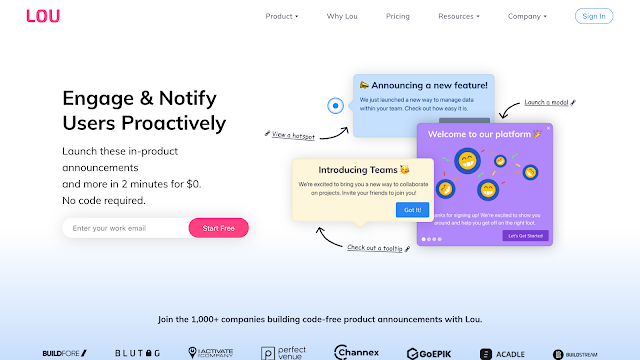
Lou Assist is an in-app announcement, hotspots and product tour SaaS DAP. Though plans seem relatively expensive and the pricing is based on MAUs,
Lou features a free forever plan.


Lou homepage


Like Usetiful, Lou Assist will continue delivering content even if your MAU’s exceed the monthly allocated limit, not standing in the way of your platform’s growth.


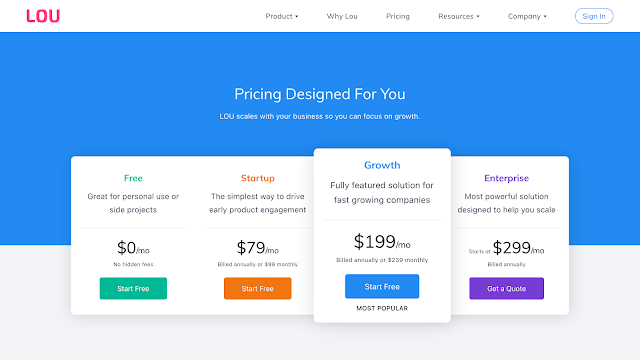
Lou Assist Pricing


Lou pricing page


  • Free Forever  - $0 - Limited to 2 announcements and 1 tour, 1 team seat

  • Startup - $99 per month or $948 annually - Unlimited tours and announcements,
    3 team seats, 2 500 MAUs

  • Growth - $239 per month or $2388 annually - Unlimited team seats, 10 000 MAUs

  • Enterprise - starts at $3588 annually, 10 000+ MAUs

Even though Lou Assist’s pricing seems relatively fair, it is still based on MAUs, and the Startup plan is still pretty costly.


Lou Assist’s Reviews

Lou has a rating of 4.7/5 at G2, 4.6/5 at Capterra. 


Pros 👍

Cons 👎

I onboard clients in a CRM platform,

I hope this makes it all easier for them,

I am able to explain how the backend

works, and where are the features/options

that they'll most need, and how to

use them all.

The browser extension seems

heavy and it gets very slow sometimes.

I think it's because it works heavily

on the page DOM, but still

I hope it will be improved soon...


If you are looking for an alternative to WalkMe, we certainly recommend checking out Lou.

It is a relatively easy-to-integrate tool that will spare you time spent on sales team consultations. Lou is a part of the subscription movement with transparent pricing and a

free plan available. Certainly worth your time. 


Inline Manual
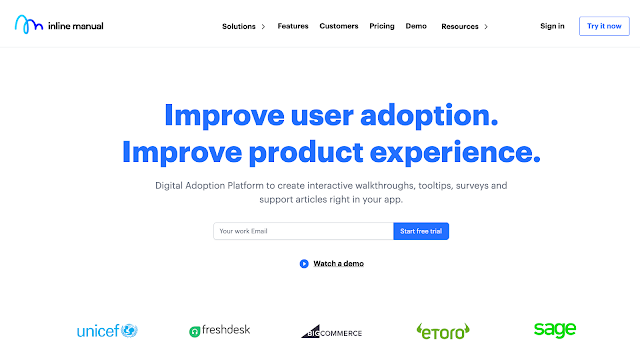

Inline Manual homepage


Inline Manual is a DAP founded in 2012 by a team with backgrounds in customer service, employee training and app development and is based in Czech Republic. 

Inline Manual features product walkthroughs, announcements, hotspots and tooltips. 

One of the main advantages is that Inline Manual provides a self-serve free trial. One of the major disadvantages is that all

content creation happens with the so called “authoring tool” extension for Google Chrome. 


Inline Manual Pricing 

Inline Manual pricing is based on MAU’s, which is not the best model for growing companies. 

They have two subscription plans

  • Standard Pro

  • Enterprise

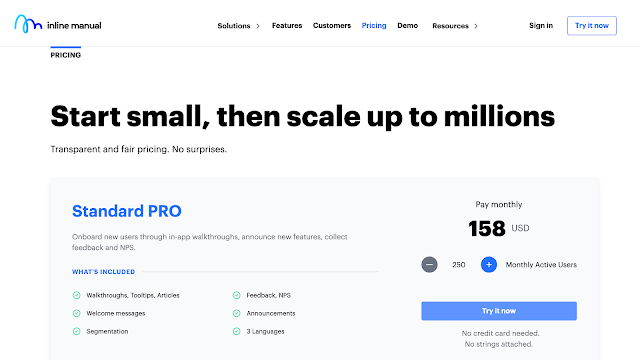
Inline Manual pricing page


The cheapest  will cost you $158 per month for 250 MAUs. 

For Standard Pro you can increase the desired MAU number and the cost per month will update accordingly. This is an interesting approach that makes

the MAU-based pricing a bit friendlier for small companies. 


The cheapest package is also the most costly, as when you increase the MAU number, the price increases in a non-proportional way. For example, the cost

per 1 MAU starts at $0.632 when set to 250 MAUs, and it goes to as little as $0.072

when MAUs are set to 3000. Don’t get too excited though, as in this case the total yearly cost will exceed $2500. 

Inline Manual also features an Enterprise plan with many of the limitations of Standard Pro removed. 


Inline Manual Reviews


Inline Manual is rated at 4.6 / 5 in G2 based on 22 reviews and 4.3 / 5 in Capterra based on 3 reviews. 


Pros 👍

Cons 👎

The detailed support portal and

the good and fast support.


When I ask for something that is

not possible, they say they will discuss

it, but so far I did not get a reaction back.


Inline Manual can get pretty expensive pretty fast, however the overall user opinion is positive. 


Summary


The DAP market, just like many other industries, has moved past old-school approaches

to sales processes. Subscription-based services that allow their prospective customers to try their software and purchase without any hassle are leading

the way, and in these terms WalkMe is falling behind. That is why we compiled a list of WalkMe alternatives worth your time. 


Popular posts from this blog

Metrics That Are Better Than NPS?

  Net Promoter Score (NPS) is a deceptively powerful and widely used metric for measuring customer loyalty and satisfaction. It works because it asks one simple question: On a scale of 0 to 10, how likely are you to recommend our product to a friend or colleague? From there, respondents are split into one of three groups, which are: Promoters (9-10): Loyal, enthusiastic advocates for your product. Passives (7-8): Users who are happy enough but could switch to a rival product under the right circumstances.  Detractors (0-6): Unsatisfied customers who are more likely to complain to friends or social media about your product. Once you have counted your responses, you get your NPS score by subtracting the percentage of Detractors from the percentage of Promoters.  However, not everyone loves the NPS score. Here are a few of the weaknesses associated with the customer loyalty metric. It’s too simple to capture the true complexity of customer sentiment. People who respond to...

How the 40% Rule Can Help You Find and Identify Product-Market Fit

  Finding product-market fit (PMF) is the Holy Grail for startup founders. Figuring out if sustainable demand for your product exists is something you want to do as early as possible so you can change course or make the necessary adjustments. However, many startups only realize they don’t have PMF well after going to market.  This article will look at how you can identify and achieve PMF, even if things aren’t quite going as expected.  Image by creativeart on Freepik What is the 40% Rule? Sean Ellis is well-known in the software development space. In a legendary 2010 blog post, he coined the term “growth hacking ,” which revolutionized how founders think about product marketing. As if that were not enough, he also popularised the Sean Ellis Rule, also known as the 40% Rule. The 40% Rule is very straightforward. All it requires is asking your users one simple question: "How would you feel if you could no longer use our product?" The respondents then have a choice of one of...

6 Steps of Building a Knowledge Base for SaaS

  Customer self-service is an ever-growing trend for SaaS products. In-app guidance and chatbots are a central part of offering customers a way to resolve issues on their own time. However, a knowledge base portal helps you go the extra mile by providing help, troubleshooting, how-to articles, and more. A good knowledge base has a lot of benefits, such as: Increased user retention Improved SEO Fewer support tickets Better customer satisfaction While the benefits are well understood, many businesses don’t know where to start unlocking them. Thankfully, customer onboarding self-service software like Usetiful is here to help. Here’s how you can build a knowledge base for your SaaS product in six simple steps. Image by benzoix on Freepik #1. Research and planning All projects need to have a clear goal right from the outset. Building a knowledge base portal is no different. So, the first thing you need to do is identify the needs and goals behind your knowledge base project.  Here’...